Paavo Järvi: Festival Ambitions in Pärnu
By Pierre Jean Tribot – July 12, 2026
Paavo Järvi’s days in Pärnu are exceptionally busy: rehearsals with the orchestra, Academy masterclasses, and evening concerts. Nevertheless, he agreed to spare a few moments to discuss the festival, the Academy and his ambitions for it, the 2026 programme, and the future.
We are in Pärnu, at your festival, now in its 16th edition. Why did you decide to create a classical music festival here?
First of all, this city is very close to my heart. As a child, I spent every summer here. Three months each year, we were in Pärnu. Those were wonderful times because it was the school holidays—we ran around everywhere, had fun, and were together as a family. Those carefree moments of childhood are among my happiest memories.
Secondly, Pärnu has a long tradition of music festivals dating back to the Soviet era. People such as Oistrakh, Shostakovich, Rozhdestvensky, Kremer, and many others came here. It was the westernmost place you could travel to within the Soviet Union without actually leaving it—because, of course, we weren't allowed to leave.
And then, of course, there was a need for a classical music festival. But not just another summer festival with the same interchangeable line-ups you see everywhere. I wanted a festival with a different and original concept, one that was deeply rooted in its own region.
You also wanted the festival to have an educational dimension?
The idea was also to establish a conducting programme, because someone taught me: my father taught me, I later had wonderful teachers at other schools, including the Curtis Institute in Philadelphia, and then I began working with Leonard Bernstein. Throughout my life, I have benefited from great musicians who generously shared their knowledge with me. I think it's now time to give something back.
I've been conducting for forty years now—my first professional concert was in Trondheim, Norway, in 1985.
And although this may sound a little harsh—that isn't my intention—I feel there are not enough truly top-level conductors today. There are many talented young conductors who build perfectly respectable careers, but their development is often weakened by a lack of technical preparation.
The profession has become much more about personality: you need to stand out as an individual in order to be noticed. But once you've attracted attention, technical competence becomes essential. You have to know how to rehearse an orchestra, how to shape an accelerando or a rallentando without constantly stopping the musicians to explain what you want. There's also the visual aspect of conducting, which is fundamental. In opera especially, you need to be able to move rehearsals forward and organise everything while speaking as little as possible. That ability really needs to be cultivated today. There are many accomplished musicians, but not enough who truly understand what conducting technique actually is.
The conducting Academy offers a very rich programme, including Estonian music by Pärt, Tüür, and Eller. Is it important to you to introduce young conductors to Estonian music?
It's extremely important. I want them to know these names, to perhaps fall in love with this music, and hopefully to programme it elsewhere in the future.
What is the most important quality for a young conductor?
Curiosity.
Certain composers will always remain essential—Mozart, Beethoven, Brahms, and the standard repertoire. But this is the beginning of a different kind of awareness: if you're a conductor, you must be curious. You need to know much more repertoire. You don't necessarily have to conduct it all, but you need to know it.
You need to read, to listen, and to develop opinions about different interpretations—why you prefer one performance over another. Conducting is far more involved than simply saying, "I love music, so I started conducting."
There's no point in becoming a conductor if you're satisfied with the minimum. You should be spending nights listening to music and talking about it. That's how we grew up.
I was fortunate to have a father who was passionate about discovery. One week at home we'd decide that Glazunov was the composer to study, the next it would be Kurt Atterberg or Franz Schmidt. It was wonderful. Every week brought a new composer. Developing that curiosity is essential for young conductors.
The programming in Pärnu also goes beyond the beaten path. I suppose that's one of the festival's trademarks?
Absolutely. To me, orchestras have become technically brilliant, but they often perform within very rigid programming and a rather narrow repertoire.
I wanted to develop a less conventional, more adventurous repertoire and present works that simply can't be done during a regular concert season.
This year we have four world premieres, Philip Glass's Double Concerto for Violin and Cello—which hardly anyone performs—two new works written especially by Estonian women composers, and my sister is performing Märt-Matis Lill's Double Concerto for Two Flutes. It's completely crazy—and I think it's wonderful.
We're now in our sixteenth year, and we no longer worry about whether audiences will come. They will. Even if we presented nothing but new music, they would still come because they trust that what we offer will be worthwhile. That's a wonderful place to have reached.
For you, is it as much a family reunion as it is a festival?
Very much so.
It's an opportunity to see my sister, my brother, my parents, my relatives, and old friends who play in different orchestras and always come here.
And every time I conduct somewhere else, I notice one or two musicians whose enthusiasm really stands out. I immediately think, "I'm going to invite them to Pärnu," because this isn't really a permanent orchestra. It's more like a collection—a gathering—of enthusiastic musicians. That's exactly what I'm looking for.
This year's central theme is "The Power of Nature." Could you explain it?
The theme is a gentle reminder of something important. With all the crises in the world, the wars, the turmoil, the catastrophe in America, everything that's happening—we've somehow forgotten that the most important thing we should care about is being citizens of this planet.
Right now, with all these wars, people recycle their plastic while thousands of aircraft are polluting the atmosphere. We overlook the enormous environmental cost of wars and the reckless actions of foolish politicians, such as those in the United States.
It's essential to remain aware of our environment and of nature. It's a quiet message, but an important one. We must never forget that we are citizens of this planet—and there is only one.
What are your plans for next year?
Next year we'll celebrate my father's 90th birthday.
There are other projects planned, and others are still being finalised. Although each edition has a central theme, we never allow ourselves to become constrained by it—we always preserve our artistic freedom.
See you next year!
Pärnu Music Festival: https://
parnumusicfestival.ee/ programm/ Paavo Järvi: https://paavojarvi.com
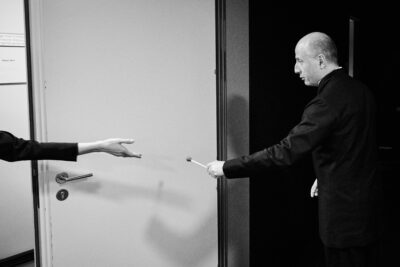
Photographs courtesy of the Pärnu Festival.
https://www.crescendo-magazine.be/paavo-jarvi-ambitions-festivalieres-a-parnu/


Comments